Editorial: Fake Ledger Page Borrows From Mass Daily News Playbook to Peddle Misinformation
After the New England Ledger began exposing Mass Daily "News" and Boston's political machine, a years-old anonymous account rebranded itself with our publication's name.
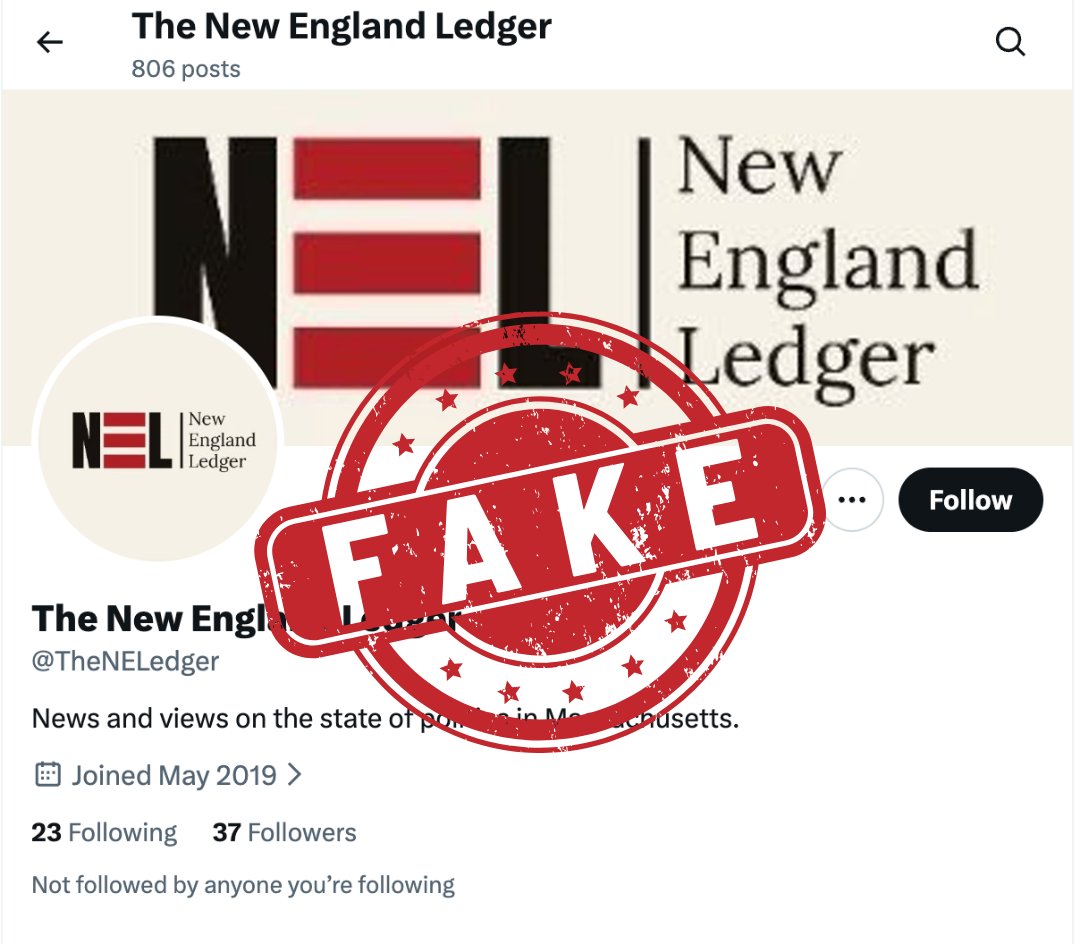
An anonymous X account that had not posted publicly since 2023 changed its name, avatar and banner on the evening of Aug. 13 2026 and began presenting itself as a local news publication. Unfortunately, it dressed itself in used clothes, taking a name that already exists: ours.
The account, which operates as "@TheNELedger," is not affiliated with the real New England Ledger, which began publishing at NewEnglandLedger.com in July of 2026. Archived records show it previously operated as "@InoMass2" under the name "InoMass," and took part in political disputes involving South Boston and state Sen. Nick Collins.
How did we come upon this information? Though usernames, biographies and profile photographs can be changed, as is the case here, the permanent account identification number ordinarily cannot. That number, 1125731390371266565, appears in a 2019 archived record assigned to @InoMass2. It now belongs to @TheNELedger.
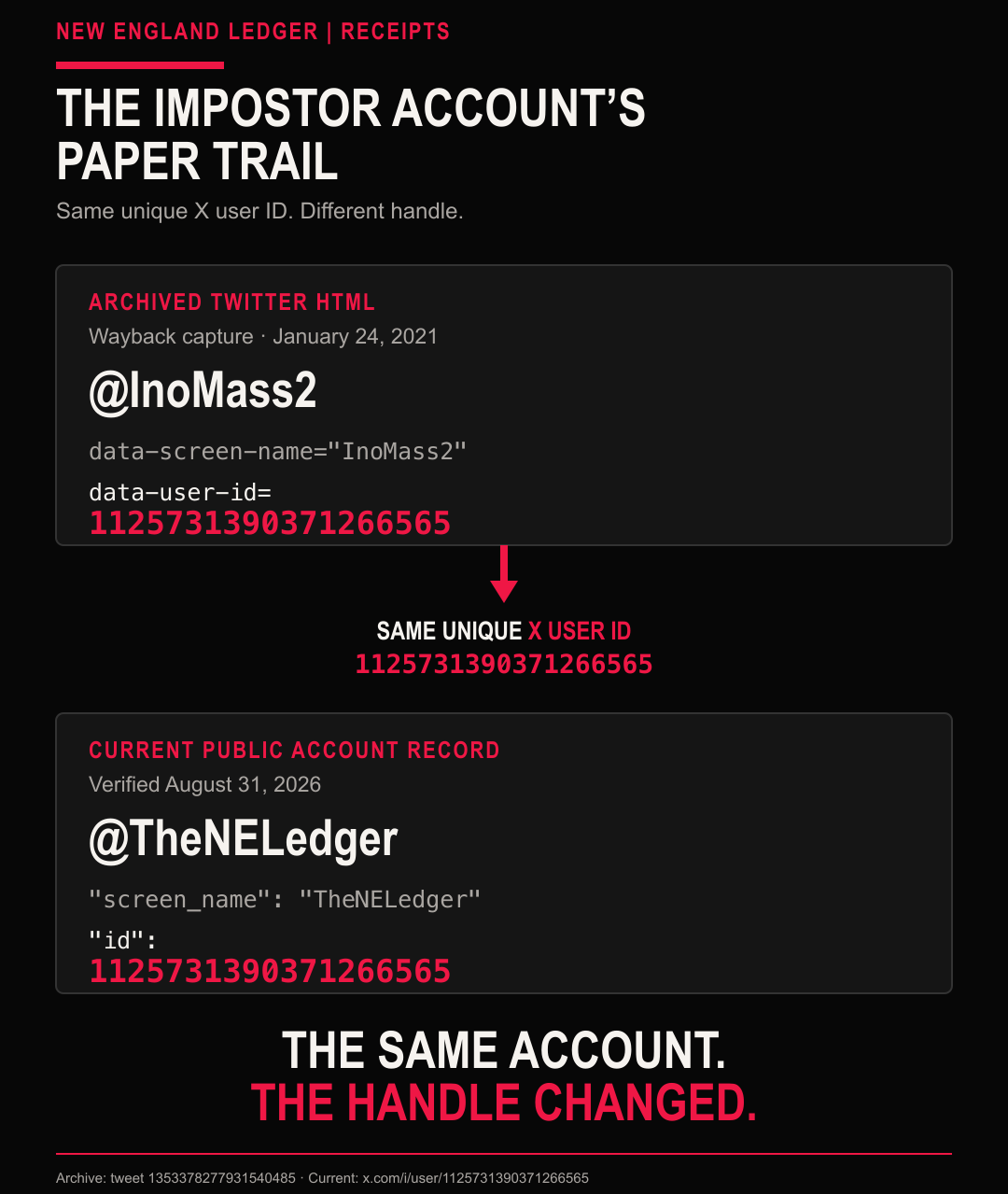
What that archive contains is worth examining to better understand why the user would reactivate the account in order to target the Ledger.
InoMass was created in May 2019. It listed Boston as its location and described itself as covering innovation and global economic trends. Early posts ran to cryptocurrency advice and national commentary before the account moved into Massachusetts politics.
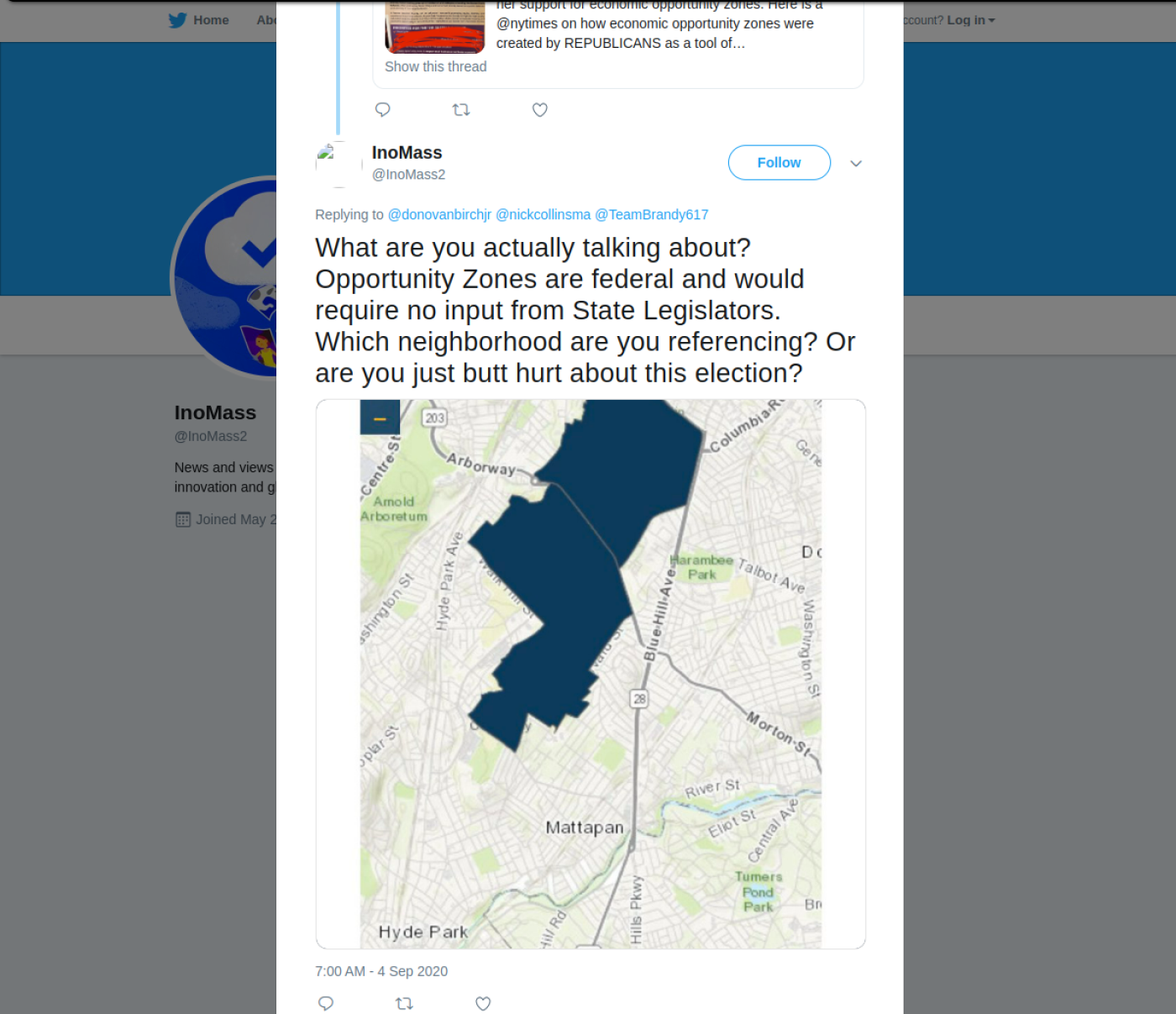
In September 2020, it entered an online argument involving Mr. Collins and state Representative Brandy Fluker Oakley, who was then challenging him for a state Senate seat. The account disputed criticism of Mr. Collins and asked another participant whether they were "butt hurt about this election."
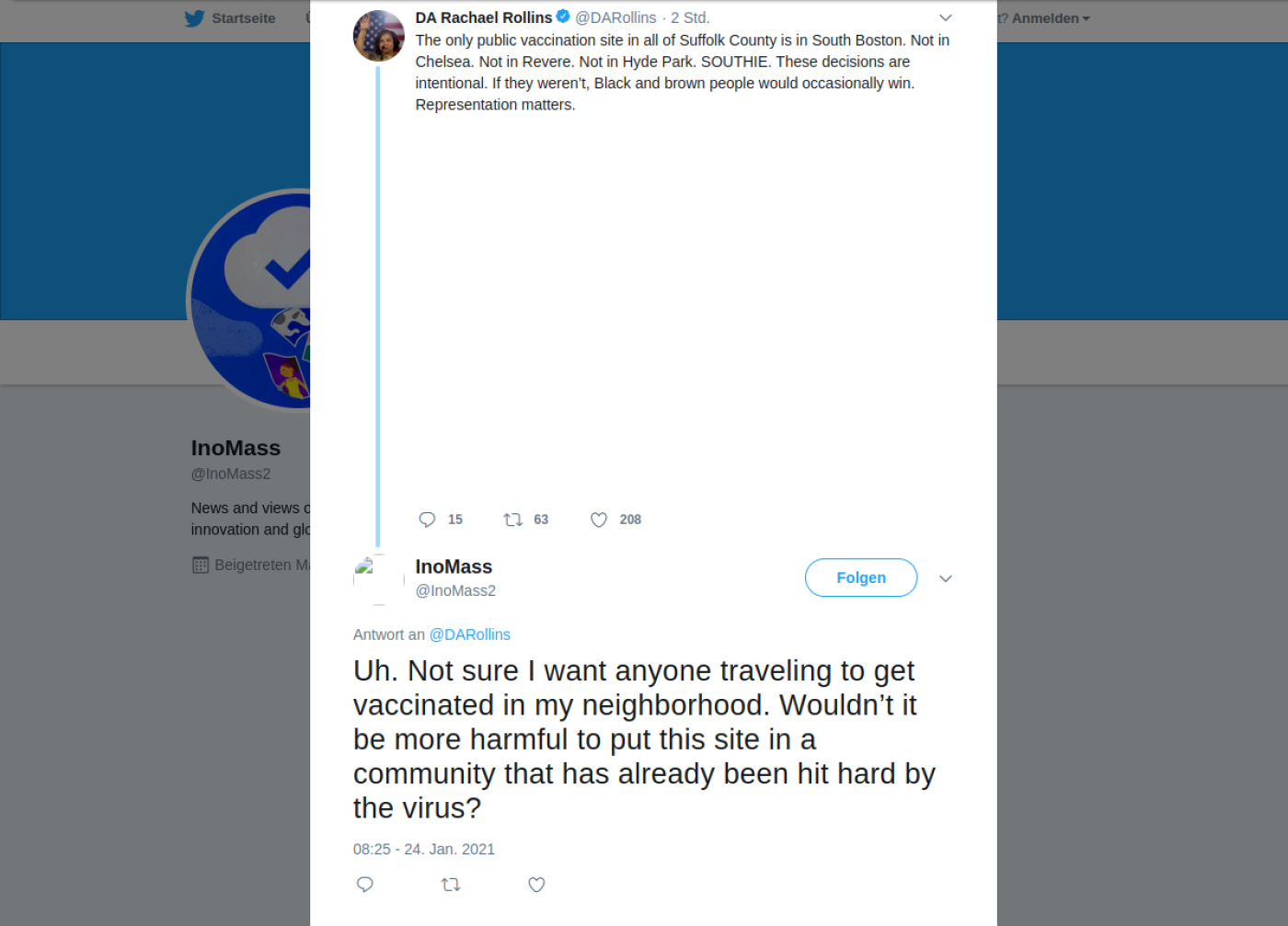
Its connection to the neighborhood became more explicit months later. Rachael Rollins, then the Suffolk County district attorney, had questioned why a major COVID vaccination site was being placed in South Boston rather than in a community with higher infection rates. InoMass replied that it did not want people traveling to be vaccinated "in my neighborhood," then suggested Chelsea receive a site instead. The person behind the account appears to have also been involved in the response to the pandemic, suggesting in a September 2023 post that they "worked on the procurement of the vaccine for a foreign government...in April of 2020" and advanced theories related to the spread of the virus.
It stopped posting in 2023 and stayed gone for three years as far as our review of the records indicate.
When it returned, it did not revive its former identity. On Aug. 18, five days after taking our name, a Medium page calling itself the New England Ledger published its first two articles. One attacked Mayor Michelle Wu's property-tax proposal. The other pushed a campaign-finance complaint against Latoya Gayle, who was challenging Collins for his seat, but ultimately wound up being defeated Tuesday night. An account that had defended a position associated with Collins in 2020 had returned with an article aimed at his current opponent.
A reader who encounters the imposter account sees a profile established in May 2019 and may reasonably conclude that the publication has operated for seven years. The account has. It's just that the name and purpose are roughly three weeks old. Taking over an aged account rather than opening a new one confers an appearance of longevity, and the history that would contradict it is not visible on the page.
The pattern has appeared before in Massachusetts, in the same media landscape. Mass Daily "News" began publishing in July 2025 after an existing anti-Wu account was converted into a news-branded operation. The account now posting as "@MassDailyNews" previously used the handle "@AntiWuCoalition" under the name Bostonians Against Mayor Wu. An old post address still preserves the earlier handle, though the post now displays under the Mass Daily "News" name.
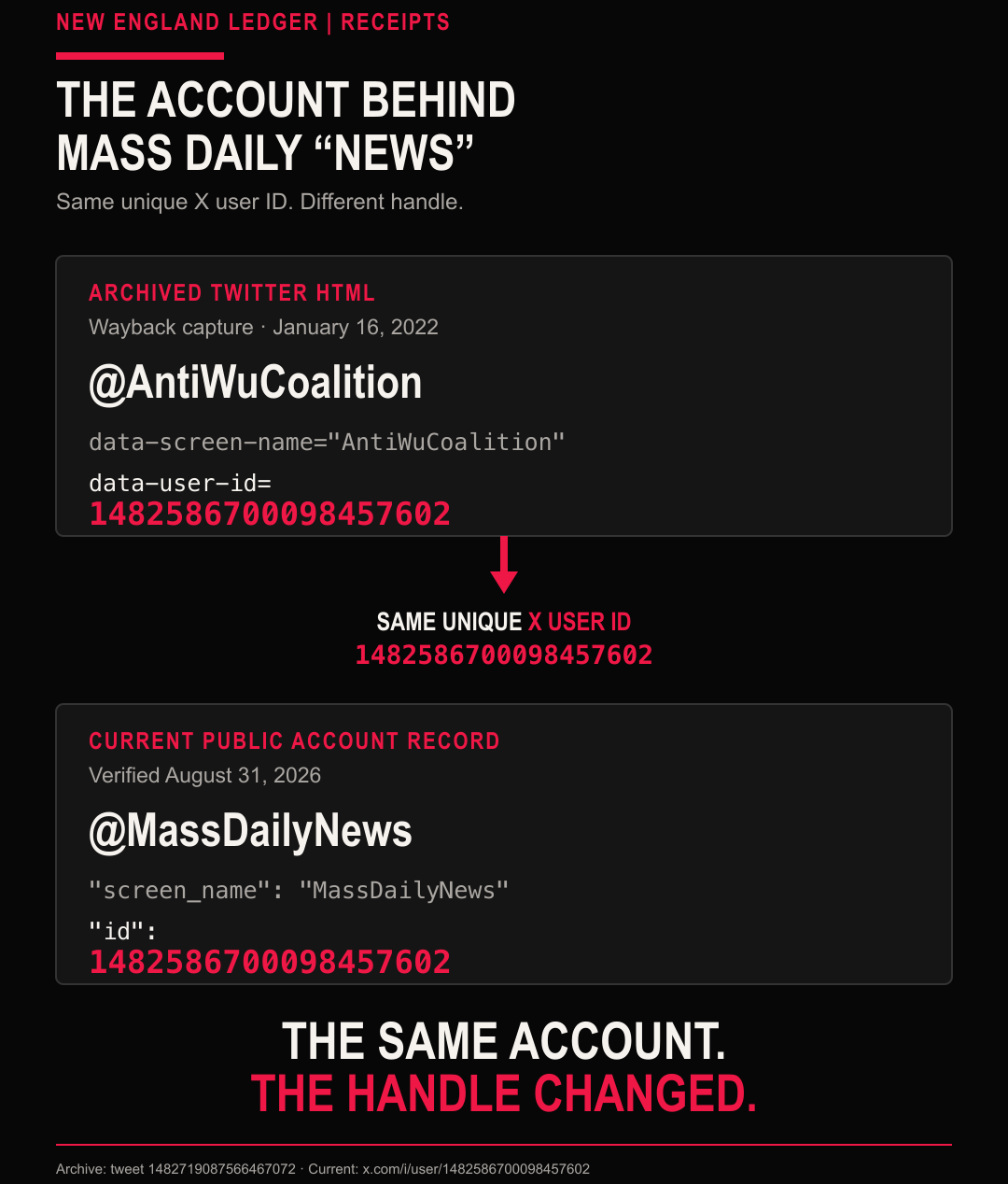
Then we showed up. New England Ledger started publishing investigations into the influence of political contributions, the media bias of local outlets, the hypocrisy of boy-who-cried-wolf politicians, and actual conflicts of interest. Within weeks of our reporting on the favored sons of right-wing Massachusetts and the political machine of South Boston, InoMass returned.
Understand what that means. Why resurrect a three-year-dormant account now? Why erase its old identity? Why borrow the name of a publication that had existed for barely a month? And why, within days, use that borrowed identity to publish political commentary that overlaps with the fights the real Ledger had already begun covering?
We do not yet know who is behind the account or whether its purpose is to confuse our readers, dilute our reporting, redirect our audience, or simply provoke us. Those are questions worth answering, and we intend to keep asking them. But the timing permits one conclusion already: someone decided the New England Ledger was worth impersonating.
That may be the clearest measure yet of how quickly this publication has entered Massachusetts' political conversation. Our investigations have challenged politicians, scrutinized supposedly independent media outlets, and followed money and influence into places where people accustomed to controlling the narrative would rather we did not look. The response, apparently, was not merely to criticize what we published. Someone decided to put on our name. There is something almost flattering about that.
As for us, there will be no confusion. The New England Ledger is at NewEnglandLedger.com. We will continue doing what apparently made somebody notice us in the first place: following the receipts, naming the players, and publishing what we find.
If somebody wanted to demonstrate that the Ledger had begun to matter, stealing our name was one hell of a way to do it.