SparkFM Is Fighting to Turn a Lease Into a Legacy
Danielle “Dani” Johnson built Boston’s first Black woman-led all-digital radio station into a community institution. Now she wants the people it serves to help secure its permanent home.
Don't have time to read the story? Listen along below.
Boston has plenty of media outlets that talk about Black and Brown communities.
SparkFM hands them the microphone.
Founder Danielle Johnson—known to listeners as “Ms. HotSauce”—launched the station in 2020 after years of watching Boston’s larger broadcasters overlook the city’s Black, Caribbean and urban voices. She had raised money, purchased equipment and prepared a studio when COVID-19 shut down the city just days before launch.
Johnson kept broadcasting anyway.
What began with five weekly programs grew into dozens of live shows covering music, politics, business, financial wellness and community life. SparkFM also became a professional platform for local DJs, artists and personalities who rarely received opportunities from commercial radio.
Now Johnson is attempting her biggest move yet: turning SparkFM’s headquarters into community-owned infrastructure.
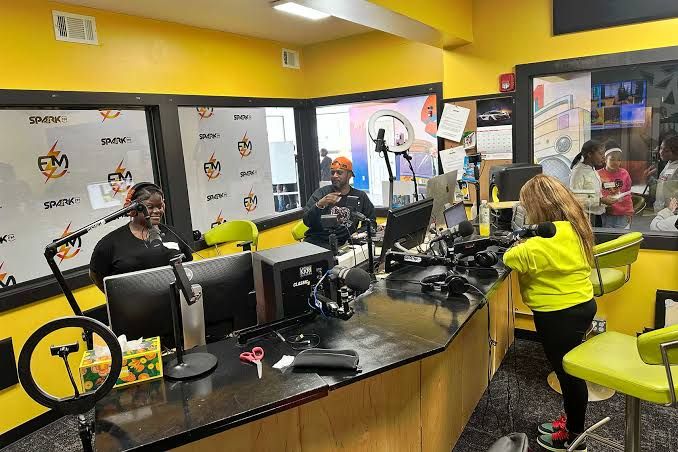
The station relocated from Hyde Park to 1195 Blue Hill Avenue in 2024, taking over newly renovated space inside the former Lenny’s Tropical Bakery building near Morton Street. The location includes broadcasting studios, podcast and music-production space and an events area designed for public gatherings.
SparkFM’s “Own the Block. Power the Culture” campaign is raising money toward purchasing the building it calls home. The station says it is pursuing a broader $200,000 goal, while its Givebutter campaign currently lists a $150,000 target.
The money is not simply about real estate.
Ownership would give SparkFM permanent space to train young media professionals, support entrepreneurs, produce original programming and host the conversations Boston’s mainstream outlets too often miss.
It would also place a Black woman-led media institution firmly on a Blue Hill Avenue corridor where longtime residents remain wary of displacement.
Johnson has already built the platform.
Now she is asking Boston to help protect it.
Because communities do not preserve their voices by renting the microphone forever. Eventually, they must own the room.