Rotary Clubs Rescue Connecticut Pantries from MAGA Policies
Connecticut Foodshare received 84 truckloads of federal food in early 2025. This year the projection is 26. Volunteers in Bridgeport spent one Saturday packing 100,000 meals to cover a gap they did not create.
Don't have time to read the story? Listen along below.
While the federal government was busy subtracting, Connecticut spent a Saturday adding, one sealed meal at a time.
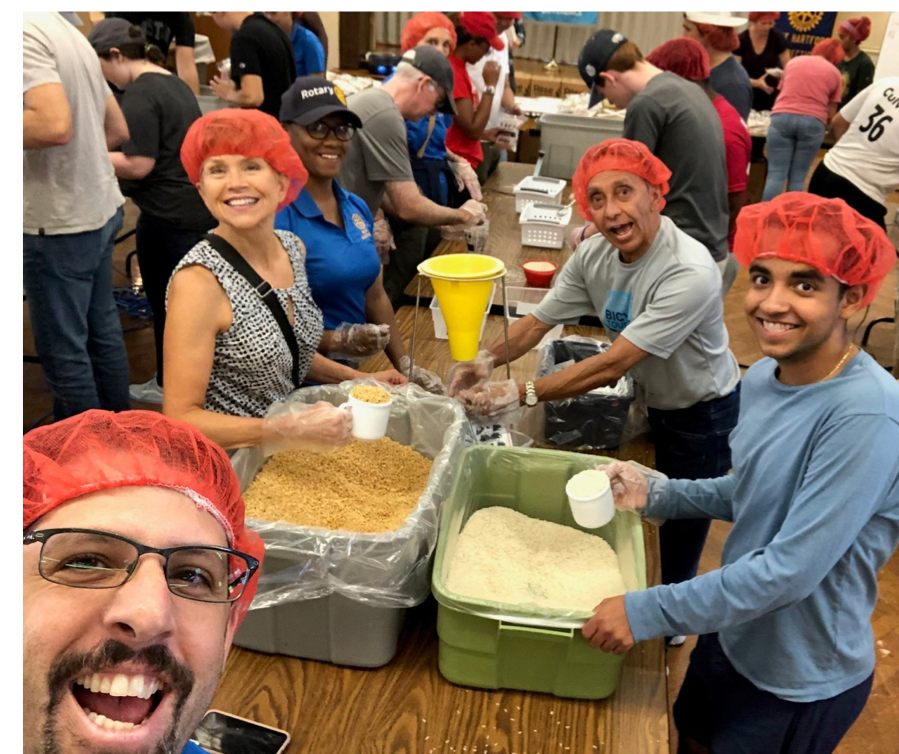
Hundreds of volunteers crowded into the Wakeman Boys & Girls Club in Bridgeport this weekend, gloves on, hairnets up, moving assembly-line fast. By the end of the day, Rotary Clubs from Bridgeport, Fairfield, Monroe and Trumbull, backed by Rotary District 7980's Disaster Task Force, had packed roughly 100,000 shelf-stable meals bound for local food banks and pantries. Organizers had set out to hit around 86,000 and blew past it. The food, supplied through The Outreach Program, went out in boxes of 36 packages, six servings each, straight to the shelves where the need is worst.
This was not a ribbon-cutting with a photo line. It was a rescue.
And make no mistake about what they were rescuing their neighbors from. The hole in Connecticut's food supply did not appear by magic. It was cut. Since President Trump returned to office, his administration and its allies in Congress have squeezed federal food aid from every direction: canceled purchasing programs, fewer deliveries, and a budget law that reengineered SNAP.
The numbers tell it plainly. Connecticut Foodshare received 84 truckloads of food through the federal emergency food program in the first quarter of 2025. For the same stretch of 2026, the projection is just 26. Foodshare president Jason Jakubowski has counted 36 canceled truckloads and about 850,000 fewer pounds of federal food year over year. That is not a rounding error. That is a warehouse going empty. When the administration canceled roughly $500 million in national emergency food-assistance funding last spring, about 1.4 million pounds of food, including 34 truckloads Foodshare was set to hand out over the summer, never made it to Connecticut shelves.
Then Washington made the squeeze personal. The federal budget law layered new SNAP work requirements onto more people, putting thousands of Connecticut residents at risk of losing benefits in 2026, even as the program's dollars are technically funded through September. The cruelty is in the design: people knocked off their grocery benefits get funneled toward pantries, and the pantries are the exact places the federal government just stopped restocking. One door shuts, and the floor under the next one is gone.
The human toll is already here. Connecticut has the highest food-insecurity rate in New England at 14.3%, and in the cities it is far worse, hitting 22.5% in Bridgeport, the very community that showed up to pack boxes. Seniors like 75-year-old Barbara Stringer describe waking up and wondering how they got here, with grocery prices up sharply. Jakubowski has called the recent SNAP crisis the biggest threat to food-insecure people he has seen in his lifetime, and warned it has done "permanent damage" to the system, with people now afraid to even sign up for SNAP because they think it is disappearing.
That is the wreckage the Rotary volunteers walked into. And here is what they did about it. No eligibility interview. No demand that a hungry kid prove a parent logged 80 hours. No spreadsheet deciding whether a veteran had earned dinner. Just neighbors, feeding neighbors, as fast as their hands could move.
The contrast could not be sharper. Washington treated food as a line to cut. Bridgeport treated hunger as an emergency to answer. The federal government counted savings. Connecticut counted meals.
So celebrate this, loudly, because it earned it. A hundred thousand meals in a single day is an extraordinary act of organization and heart, four clubs turning frustration into a production line. This is Connecticut at its best, the version of America where people see a neighbor in trouble and run toward them.
But hold two truths at once. The generosity is real, and it is not a solution. Foodshare has said the federal cuts will strip millions of meals from the neighbors it serves, its most vulnerable ones, seniors, children, working families and people with disabilities. Volunteers, however heroic, cannot permanently replace truckloads measured in the dozens and dollars measured in the millions. Food pantries were built for emergencies, not to stand in for a national government that walked off the job. Connecticut has scrambled to help, setting aside emergency money for grocery cards, but a one-time card is not a food system.
So thank the Rotary Clubs of Bridgeport, Fairfield, Monroe and Trumbull. Then ask the harder question their gloves and hairnets force on all of us: why were good neighbors made to run this hard to do what the federal government was supposed to be doing all along?
This weekend, four clubs made sure thousands of their neighbors would not sit down to an empty plate. The least the rest of us can do is notice who emptied it, and who filled it back up.