Ascend Used Social Equity to Win Its Boston License. Then Its President Helped Trump’s DOJ Prosecute His Former Partner.
A federal jury acquitted Suffolk County Sheriff Steven Tompkins in a prosecution built on testimony from Ascend Wellness President Frank Perullo, who cooperated under immunity with Trump's Justice Department.
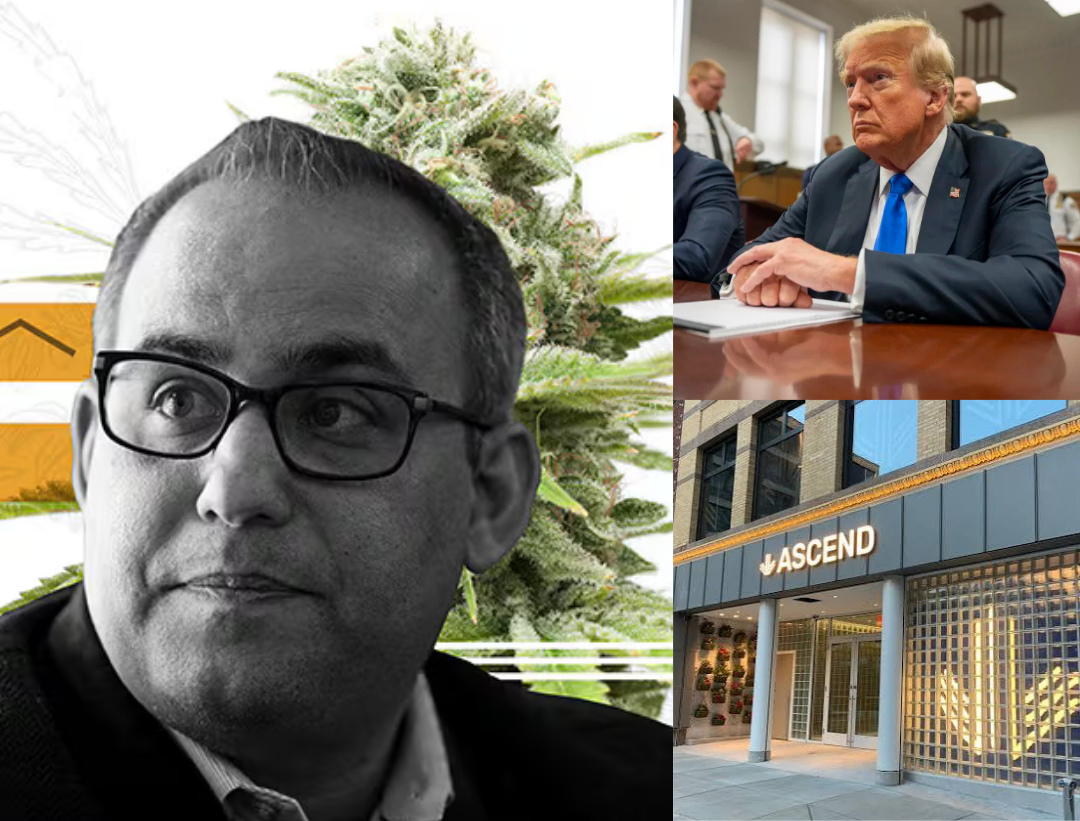
A federal jury has acquitted Suffolk County Sheriff Steven Tompkins of extortion charges, rejecting a prosecution built largely around testimony from Ascend Wellness President Frank Perullo.
Perullo, Ascend’s cofounder and the government’s star witness, testified under immunity that Tompkins pressured him to sell the sheriff $50,000 in pre-IPO company stock and later refund the investment after its value fell.
Jurors returned not-guilty verdicts on both counts within hours of beginning deliberations September 2.
The verdict raises new questions about Perullo’s cooperation with the Trump administration’s Justice Department—and Ascend’s willingness to turn a partnership created to advance social equity into evidence against a former partner.
Ascend, Perullo and company Vice President of Social Equity Danielle Drummond did not respond to New England Ledger’s questions before publication.
From social equity to alleged leverage
Prosecutors argued that Tompkins held power over Perullo because Ascend partnered with the Suffolk County Sheriff’s Department on a program to train and hire people returning from incarceration.
That partnership helped Ascend demonstrate the “positive impact” required to obtain its Massachusetts cannabis licenses. When Ascend announced its plans, former Massachusetts CEO Andrea Cabral said the company would “balance profits against conscience.”
Years later, prosecutors portrayed that commitment as a vulnerability.
Perullo testified that he worried Tompkins could threaten Ascend’s relationship with the Sheriff’s Department and jeopardize its license. Prosecutors alleged Tompkins reminded him, “I helped you get Friend Street,” while seeking access to the stock.
But the defense argued that Ascend’s license was never in danger. The company donated approximately $1 million to the Last Prisoner Project and pursued other efforts to satisfy its positive-impact obligations. Perullo also acknowledged that neither state regulators nor Cabral ever told him the license was at risk.
Tompkins’s attorneys portrayed Perullo as a sophisticated executive who cooperated only after federal investigators approached him—and because immunity protected him from potential prosecution.
Jurors heard that Perullo and Tompkins remained extraordinarily close throughout the alleged extortion. They attended movies together, exchanged messages saying “I love you,” and referred to each other as brothers. Perullo also promoted Tompkins’s reelection, calling him a “man of integrity,” while allegedly feeling pressured by him.
The jury acquitted Tompkins after a trial in which even prosecutors acknowledged Perullo was no hero.
A $50,000 case against a former partner
The amount at the center of the prosecution was minuscule compared with Ascend’s scale.
The publicly traded multistate operator reported approximately $888 million in assets, $67 million in cash and $126 million in second-quarter 2026 revenue. The disputed $50,000 amounted to less than Ascend generated in an average hour.
There is no public evidence that Ascend initiated the investigation. But its president accepted immunity and became the central witness in a failed Trump Justice Department prosecution arising from a partnership Ascend once showcased as evidence of its social conscience.
That transformation matters because Ascend has also worked to weaken a separate safeguard intended to protect smaller and social-equity cannabis businesses.
Ascend pushes for more licenses
Massachusetts generally limits operators to three retail licenses. Many social-equity businesses consider that cap an essential protection against domination by multistate corporations.
Ascend wants it raised.
At a 2025 legislative hearing, Ascend sent representatives to advocate for license-cap expansion. Drummond argued that allowing larger companies to invest in more businesses could help struggling operators and allow Ascend to provide training and support.
Equity businesses warned that expansion would instead give large operators more power to acquire smaller competitors in an already distressed market.
Questions about Ascend’s reach predate that proposal.
In 2021, former state representative Marie St. Fleur and former Suffolk prosecutor Amy McNamee sued Union Twist and several investors, including Ascend cofounder Abner Kurtin. They alleged unpaid wages, breach of contract and efforts to dilute their ownership interests.
Their complaint also alleged that Kurtin and investor Gregory Thomaier held equity, authority or control over entities connected to more Massachusetts cannabis operations than state limits allowed.
Union Twist was legally separate from Ascend. The allegations nevertheless raised questions about whether overlapping investors and companies were extending their influence beyond what the law contemplated.
In 2024, Equitable Opportunities Now, the Black Economic Council of Massachusetts and cannabis business owners cited that complaint and reporting by journalist Grant Smith Ellis while requesting a Cannabis Control Commission investigation. The coalition alleged Kurtin owned or controlled interests in six to nine Massachusetts licenses.
Those claims remain allegations. No public commission finding cited by New England Ledger establishes that Ascend or Kurtin violated the ownership cap.
But regulators have never publicly resolved the question raised by equity advocates: How much influence do Ascend’s founders and affiliated investors exercise over other Massachusetts cannabis businesses?
Ascend promoted social equity when it needed approval to enter Boston. It later used a social-equity executive to argue that allowing large operators to expand would benefit smaller businesses. Then its president cooperated under immunity with the Trump Justice Department in an unsuccessful prosecution built partly on the claim that Ascend’s equity commitment left the company vulnerable.
A jury has now rejected that prosecution.
Ascend’s leaders declined to explain how many returning citizens its partnership ultimately trained or employed, whether those programs continue, why Perullo received immunity, or how its license-cap position benefits equity operators.
For a company that entered Massachusetts promising to balance profits against conscience, those unanswered questions deserve attention.